The Rise of the Agentic Era: Strategic Trends Reshaping Artificial Intelligence in 2026
The transition from experimental artificial intelligence to functional, autonomous utility has reached a critical inflection point. As we enter 2026, the global technology landscape is moving beyond the “year of talk” that characterized 2025, shifting toward a rigorous era of proof. This evolution is defined by the rise of AI agents—autonomous entities capable of managing complex workflows with minimal human oversight. This shift matters because it signals the end of AI as a mere conversational novelty and its birth as a core component of the corporate workforce, demanding new operating models, governance frameworks, and a fundamental rethinking of human-machine collaboration.
From Promise to Proof: The ROI Mandate
The primary theme for 2026 is the demand for measurable impact. In previous years, organizations were content with launching pilot programs and small-scale experiments to test the capabilities of Large Language Models (LLMs). However, the current fiscal year marks a “flight to quality.” Enterprise leaders are now prioritizing AI agent Return on Investment (ROI) as the ultimate metric of success.
According to Satish Shenoy, VP of Global Technology Alliances and AI Strategy at SS&C Blue Prism, the distinction between a successful deployment and a failed experiment lies in disciplined orchestration. Organizations are moving away from generic, “flashy” AI applications in favor of targeted use cases that deliver tangible value in customer service, processing time, and cost reduction. The industry is seeing a surge in specialized AI agents—smaller, highly efficient models tailored for specific regulated industries such as healthcare and financial services, where precision outweighs general knowledge.
The Evolution of the Enterprise Operating Model
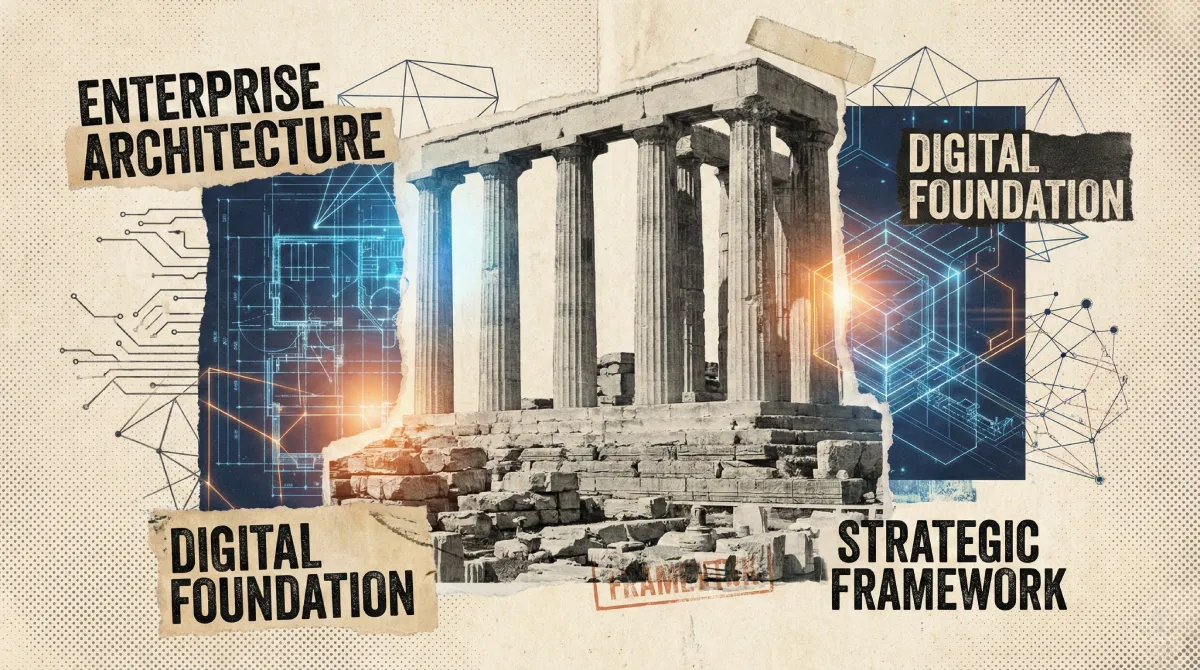
As agentic AI matures, it is becoming clear that these systems do not fit into traditional organizational charts. Unlike human employees, AI agents do not adhere to standard shifts or require conventional training modules. Instead, they require a sophisticated infrastructure of access, governance, and integrated data.
A significant challenge remains: many businesses are still operating on legacy frameworks. Research from McKinsey indicates that a staggering 89% of organizations are still rooted in “industrial age” operating models, with only 1% functioning as truly decentralized, agile networks. To bridge this gap, 2026 is seeing the adoption of structured frameworks like the Enterprise Operating Model (EOM). These frameworks provide the necessary roadmap for integrating digital workers, APIs, and AI agents into a unified environment where they can collaborate seamlessly with human staff.
The Human-Agent Collaborative Ecosystem
The narrative surrounding AI has shifted from “replacement” to “augmentation.” By 2028, it is projected that nearly 38% of organizations will have AI agents serving as formal team members within human departments. This emergence of “blended teams” is redefining the nature of human input.
The rise of agentic AI is elevating the importance of critical thinking and guidance. While natural language processing (NLP) and generative AI have lowered the barrier to technical development, the quality of an agent’s output remains tethered to the quality of human direction. Skills such as prompt engineering and strategic oversight are becoming more valuable than traditional data entry or basic analysis. In this ecosystem, humans act as the “quality control gates,” providing the business judgment and ethical oversight that autonomous systems currently lack.
Multi-Agent Workflows and Orchestration
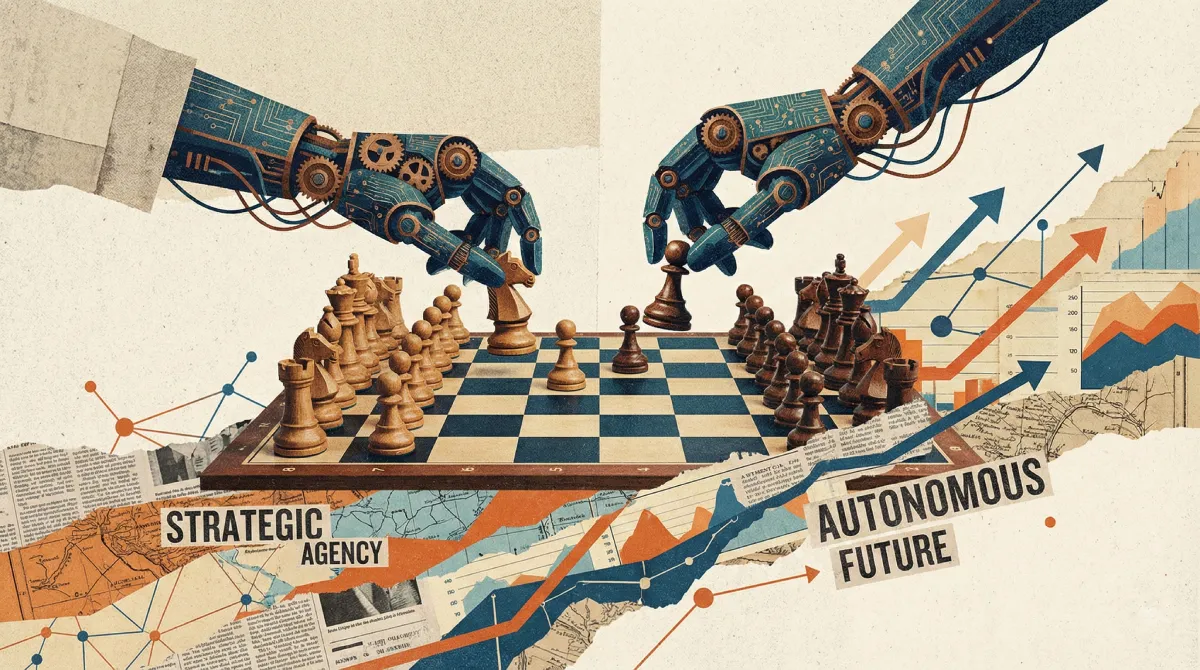
The complexity of modern business processes is too vast for any single AI model to handle in isolation. Consequently, 2026 has ushered in the era of multi-agent orchestration. Instead of single-threaded automations, enterprises are deploying agentic workflows where multiple specialized agents collaborate.
In these scenarios, one agent might be responsible for data extraction from unstructured sources, another for context-sharing and long-term memory management, and a third for coordinating the final decision-making process. This “hybrid automation” model allows AI to handle unpredictable variables while Robotic Process Automation (RPA) manages the reliable, repetitive core processes. This synergy ensures that legacy systems remain integrated while the enterprise benefits from the advanced reasoning of agentic AI.
The Governance Gap and Ethical Scaling
Perhaps the most pressing trend in 2026 is the sudden prioritization of AI governance. For years, governance was an afterthought in the rush to innovate. However, as regulations tighten and security threats become more sophisticated, businesses are finding that they cannot scale without a foundation of trust.
Omid Hosseinitabar, Director of Product Management at SS&C Blue Prism, notes that many AI deployments fail in production because they lack explainability and auditability. To succeed, an agent’s actions must be transparent and reversible. Organizations are now implementing rigorous human-in-the-loop (HITL) protocols to ensure that autonomous agents remain aligned with corporate ethics and legal requirements. Without this “blueprint” for responsibility, AI-powered systems risk becoming liabilities rather than assets.
The Resilience of RPA in an AI-First World
Contrary to early predictions that AI would render Robotic Process Automation (RPA) obsolete, the two technologies have entered a symbiotic relationship. RPA provides the stable “hands” for the enterprise, while agentic AI provides the “brain.”
For high-volume, repetitive tasks, traditional RPA remains the most cost-effective solution. However, when those processes encounter exceptions or require unstructured data analysis, the AI agent steps in to provide the necessary insight. This combination allows for end-to-end autonomous operations, moving the enterprise closer to the goal of a fully “autonomous enterprise” capable of self-correction and continuous optimization.
Conclusion: Strategy Over Speed
As we look toward the remainder of 2026, it is evident that the “agentic revolution” is not about who adopts the technology the fastest, but who implements it most strategically. The future of the enterprise belongs to leaders who root their automation strategies in governance, ROI, and human-centric collaboration. By moving from isolated pilots to integrated, orchestrated workflows, businesses can avoid the predicted 40% failure rate for agentic projects and unlock the true potential of the machine-learning era.
Source: https://www.blueprism.com/resources/blog/future-ai-agents-trends/