Bridging the Autonomy Gap: The Strategic Shift Toward Human-Centered Agentic Design
The rapid ascent of “agentic AI”—autonomous systems capable of reasoning and executing multi-step workflows—has transformed from a speculative technology into a boardroom priority in 2025. Unlike the assistive “copilots” of previous years, AI agents are designed to act with a degree of independence, managing tasks from invoice reconciliation to supply chain logistics with minimal manual intervention. However, the transition from pilot projects to scaled enterprise value has hit a significant hurdle. Recent research from Gartner suggests that nearly 40 percent of agentic AI projects face cancellation by 2027, primarily due to escalating costs, ambiguous business value, and inadequate risk controls.
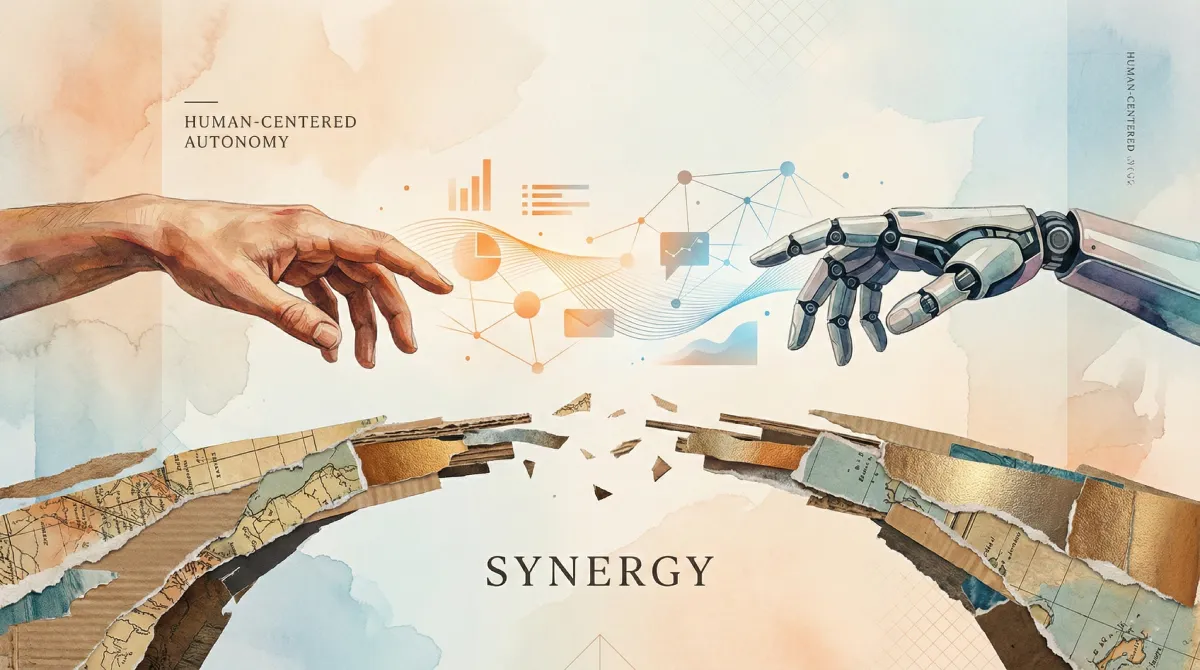
This looming “reality check” has catalyzed a shift in how leading technology firms approach development. Organizations are moving away from chasing “flashy” automation and toward a human-centered design philosophy. The core of this movement, exemplified by the SAP AppHaus Joule Agent initiatives, posits that the true potential of agentic systems lies not in replacing human agency, but in the seamless orchestration of human-agent partnerships. By focusing on real-world pain points and structured collaboration, enterprises aim to bypass the pitfalls of over-automation and deliver measurable ROI.
The Architecture of Autonomy: Beyond the Assistant
At its technical core, agentic AI represents a fundamental departure from traditional automation. While Robotic Process Automation (RPA) follows deterministic scripts, agentic systems use Large Language Models (LLMs) as a reasoning engine to navigate variability.
Core Components of Agentic Systems
Effective agentic design typically involves four primary architectural layers:
Reasoning and Planning: The “brain” that decomposes complex goals into manageable tasks.
Memory Modules: Retaining context from past interactions to ensure consistency and avoid repeating errors.
Tool and API Integration: The “hands” that allow the agent to interact with enterprise systems like ERP, CRM, or external databases.
Governance Guardrails: Built-in limits that define when an agent must escalate a decision to a human supervisor.
This architecture allows for what experts call “Modular Agentic AI.” Instead of a single, monolithic model attempting to solve every problem, organizations are deploying ecosystems of specialist agents. For example, in a finance department, one agent may specialize in bank statement reasoning while another handles trade regulation compliance. This modularity makes the systems more auditable and significantly more reliable than general-purpose assistants.
From Discovery to Design: The Human-Centered Framework
The primary reason for the high failure rate of AI projects is often the “technology-first” approach, where a solution is applied before a problem is fully understood. To counter this, human-centered design workshops have emerged as a critical tool for identifying high-value use cases.
The Discovery Phase: Spotting Opportunity
The first step in building a successful agent is the Discovery Workshop. This phase is less about coding and more about business logic. Stakeholders must evaluate potential tasks based on their complexity and variability. Tasks that are high in variability—where conditions change frequently—are ideal for agentic AI, whereas simple, repetitive tasks remain better suited for traditional RPA.
Questions central to this phase include:
Which specific inefficiency causes the most friction for end-users?
Who would benefit most from this automation?
What is the “agentic potential” based on the need for judgment versus raw speed?
The Design Phase: Hiring a “Super-Specialist”
Once a use case is identified, the Design Workshop shifts to the specifics of the human-agent relationship. A powerful metaphor used in these sessions is “hiring a super-specialist.” Participants draft a job description for the agent, outlining its responsibilities, required skills, and—most importantly—the points where it must seek human approval.
By treating the agent as a “digital employee,” designers can more accurately define the system prompts and instructions. This stage ensures that the resulting AI has a clear “reason and act” framework, reducing the risk of “hallucinations” or off-script behavior that often plagues poorly governed AI.
Market Dynamics and the Competitive Landscape
The push for human-centered agents is also a response to a shifting vendor landscape. Major players like SAP, Microsoft, and Salesforce are in a race to provide the most integrated “Agentic Enterprise” architecture.
In late 2025, SAP introduced specialized Joule agents for core functions, such as a Cash Management Agent capable of automating up to 70 percent of manual bank reconciliation tasks. Similarly, Salesforce has expanded its “Agentforce” platform to focus on customer-facing agents that can dynamically adjust marketing campaigns based on real-time feedback.
These developments reflect a broader market trend: the transition from “AI as a feature” to “AI as a worker.” According to recent surveys of business leaders, while 94 percent believe AI is improving innovation, 78 percent specifically see agentic AI as the key to transforming business operations. The successful vendors will be those who provide not just the raw intelligence, but the tools for businesses to govern and customize that intelligence.
The Path Ahead: Preserving Human Agency
As we look toward 2026, the focus on agentic AI will likely center on two themes: orchestration and ethics. The challenge is no longer just making an agent “smart,” but making it a team player. This requires open standards for agent-to-agent communication and robust platforms for monitoring agent “health” and compliance.
“I think there’s no higher duty than to preserve human agency and human freedom,” noted tech leader Eric Schmidt in a recent address at Harvard University, emphasizing that as AI systems begin to plan and learn independently, human oversight becomes more, not less, important.
The ultimate takeaway for the enterprise is clear: agentic AI is not a “set-and-forget” technology. Success requires a disciplined, human-centered approach that prioritizes value over hype. Organizations that invest in the “soft skills” of AI—design thinking, prompt engineering, and governance—will be the ones to successfully navigate the upcoming market correction and unlock the true productivity gains of the agentic era.
Source: https://news.sap.com/2025/12/designing-agentic-systems-joule-agent-workshops/