
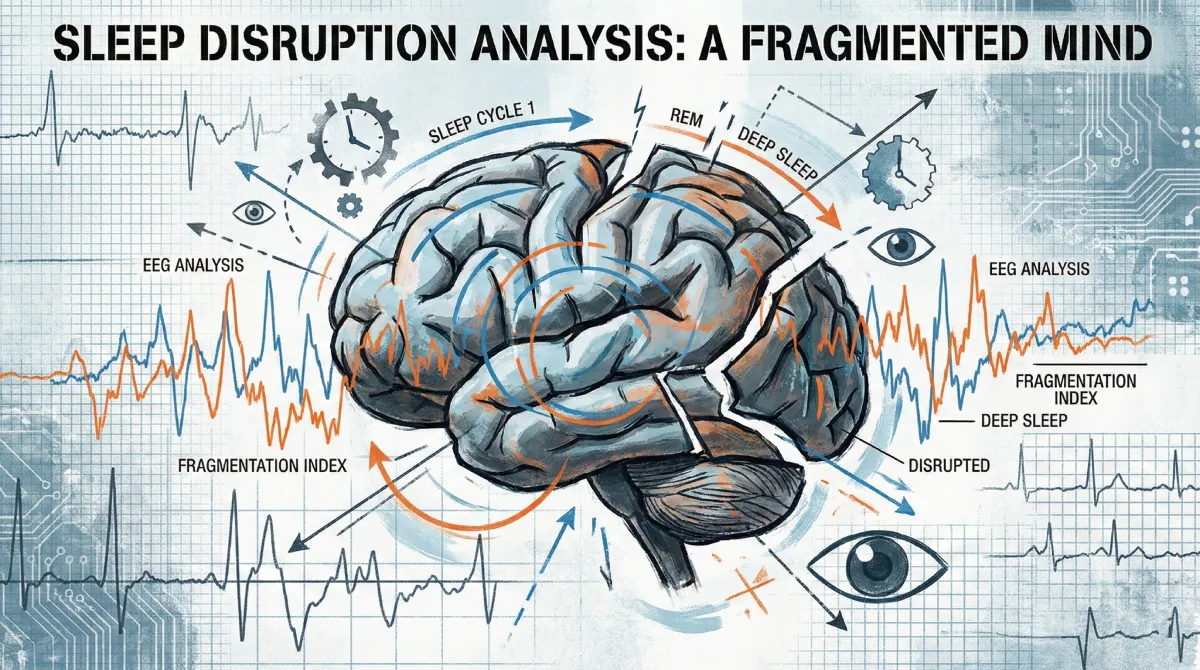
Machine Learning Analysis Links Chronic Sleep Fragmentation to Accelerated Brain Aging
A comprehensive longitudinal study leveraging advanced machine learning models has provided new evidence that poor sleep quality directly contributes to the acceleration of biological brain aging. By analyzing data from over 27,500 middle-aged and elderly participants within the UK Biobank, researchers have identified a quantifiable link between suboptimal sleep patterns and a brain age that significantly exceeds an individual’s chronological age. The study, which utilized magnetic resonance imaging (MRI) and sophisticated data analysis, suggests that for every point decrease in a standardized healthy sleep score, the biological age of the brain increases by approximately six months. Furthermore, the most severely affected group exhibited brains nearly a year older than their actual age, highlighting sleep as a critical pillar of neurological preservation and a potential target for preventative innovation in dementia research.
This development is particularly significant in the broader context of artificial intelligence and healthcare. The use of machine learning to estimate “brain age” represents a shift toward objective, data-driven diagnostics. By training algorithms on vast neurological datasets, scientists can now identify subtle patterns of decay that were previously invisible to the human eye. This study moves the conversation beyond simple correlations, identifying systemic inflammation and the failure of waste-clearance mechanisms as the technical drivers behind sleep-induced cognitive decline.
Technical Methodology: Utilizing Machine Learning for Biological Brain Age Estimation
The research, led by Abigail Dove, a neuroepidemiologist at the Karolinska Institute, employed a multi-dimensional assessment of sleep quality across a period of approximately nine years. The study focused on five specific variables: chronotype (the natural inclination toward “morningness” or “eveningness”), total sleep duration, frequency of insomnia, presence of snoring, and levels of daytime sleepiness.
Quantifying the Brain Age Gap
To determine the biological impact of these variables, the team utilized MRI scans processed through a machine learning framework. This model was trained to recognize structural brain markers associated with aging—such as cortical thinning and ventricular enlargement—across a diverse population. By comparing a participant’s estimated biological brain age against their chronological age, the researchers established a “Brain Age Gap” (BAG).
Categorization and Scoring
Participants were categorized into three distinct cohorts based on their cumulative sleep health:
Healthy Sleep (41.2%): Participants meeting optimal criteria across all five dimensions.
Intermediate Sleep (55.6%): Those with moderate disturbances or inconsistent habits.
Poor Sleep (3.3%): Individuals characterized by chronic insomnia, snoring, or a significant misalignment between their chronotype and lifestyle.
The data indicated that “night-owl” lifestyles and sleep durations outside the 7 to 8-hour window were the most aggressive predictors of an increased BAG.
The Biological Mechanism: Inflammation and the Glymphatic System
One of the most innovative aspects of this study is the investigation into the underlying biological pathways. The research team hypothesized that poor sleep acts as a physiological stressor, triggering a state of low-grade chronic inflammation.
The Role of Inflammatory Biomarkers
To test this, the researchers used a suite of biomarkers including C-reactive protein (CRP) levels, white blood cell counts, and platelet counts. Using mediation analysis—a statistical method to determine if a variable is the intermediary in a causal chain—they found that inflammation explained over 10 percent of the relationship between poor sleep and accelerated brain aging.
[Image showing the causal pathway from sleep fragmentation to systemic inflammation to neuronal degradation]Waste Management and the Glymphatic System
Beyond inflammation, the study highlights the disruption of the glymphatic system. This serves as the brain’s waste-clearance mechanism, which becomes ten times more active during deep sleep. Its primary function is to flush out toxic proteins, such as beta-amyloid, which are associated with Alzheimer’s disease. Chronic sleep fragmentation effectively “clogs” this system, leading to a build-up of metabolic waste that impairs nerve cell function and accelerates tissue atrophy.
Landscape and Industry Impact: Toward Predictive Preventative Health
The intersection of sleep science and machine learning is creating a new market for preventative healthcare technology. As datasets like the UK Biobank become more accessible, tech companies are developing automated tools to monitor “biological age” in real-time. This research provides a roadmap for future wearables and health platforms to transition from passive tracking to predictive intervention.
Integration with Wearables and Automation
Currently, consumer wearables track sleep stages with varying degrees of accuracy. However, the next generation of automation in health tech will likely involve integrating these sleep metrics with other longitudinal data—such as inflammatory markers from smart-patches or cardiovascular health metrics—to provide a holistic “brain age” report. This would allow clinicians to intervene years before the onset of cognitive symptoms.
“Our findings provide evidence that poor sleep may contribute to accelerated brain aging,” explains Abigail Dove in a statement. She notes that identifying inflammation as a mechanism provides a clear target for future pharmaceutical and lifestyle-based innovations.
Market and Company Background: The UK Biobank as an Innovation Hub
The UK Biobank remains one of the most vital resources for large-scale health data research. By following 500,000 participants over several decades, it has provided the raw data necessary to train the high-fidelity machine learning models used in this study. The Karolinska Institute, a global leader in medical research, continues to utilize this data to refine our understanding of neuroepidemiology.
The impact on the pharmaceutical and tech sectors is twofold. First, there is a renewed interest in “anti-inflammatory” interventions specifically designed to protect the brain during sleep. Second, there is a surge in demand for non-invasive sleep automation tools—such as smart beds that adjust temperature to optimize the glymphatic cycle or AI-driven CPAP machines that mitigate the brain-aging effects of snoring and apnea.
Future Implications: Redefining Sleep as Cognitive Capital
As machine learning models become more refined, the definition of a “healthy lifestyle” is being rewritten with mathematical precision. The takeaway from this research is that sleep is not merely a period of rest but a vital period of neurological maintenance. The failure to prioritize high-quality sleep is essentially a decision to accelerate the biological clock of the brain.
In the coming years, we can expect “brain age” to become a standard health metric, much like blood pressure or cholesterol levels. The integration of AI into neurology will allow for personalized sleep optimization plans, where a machine learning agent might adjust a user’s environment, schedule, or diet to minimize the inflammation that leads to brain aging.
Ultimately, this study serves as a call to action for both individuals and the technology industry. By addressing sleep quality today, we may be able to significantly delay the onset of age-related cognitive decline, preserving the most vital human asset: the processing power of the brain.
Source: https://www.wired.com/story/poor-sleep-quality-accelerates-brain-aging/
Would you like me to research how AI-driven smart beds are using real-time biometric feedback to optimize the glymphatic cycle, or should we examine the latest machine learning models used for early-stage dementia detection via MRI?


