Adaptive Intelligence: Inside Atlassian’s Architecture for Deep Research v2
The enterprise AI landscape is shifting from simple conversational interfaces to autonomous, stateful systems capable of multi-step reasoning. Atlassian’s release of Rovo Deep Research v2 marks a critical milestone in this evolution, introducing a rearchitected engine designed to simulate the iterative nature of human investigative work. By moving beyond “single-shot” queries toward an adaptive, multi-agent framework, Deep Research v2 addresses the primary limitations of first-generation AI assistants: lack of depth, limited steerability, and an inability to bridge the gap between internal organizational data and the public web.
This architectural overhaul is more than a software update; it is a fundamental redesign of how AI perceives and interacts with enterprise knowledge. As organizations increasingly rely on large language models (LLMs) to synthesize complex information across disparate platforms like Jira, Confluence, and external SaaS applications, the need for a research engine that can self-correct and refine its own search parameters has become paramount for high-stakes decision-making.
Technical Foundations: The Multi-Agent Orchestration Layer
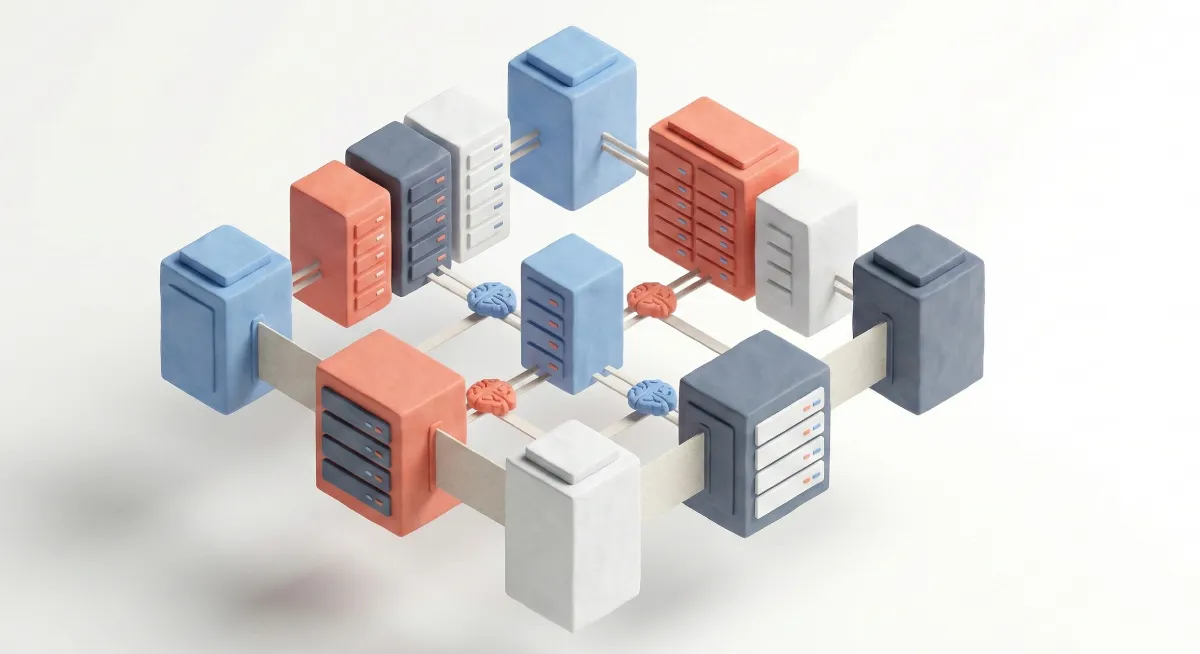
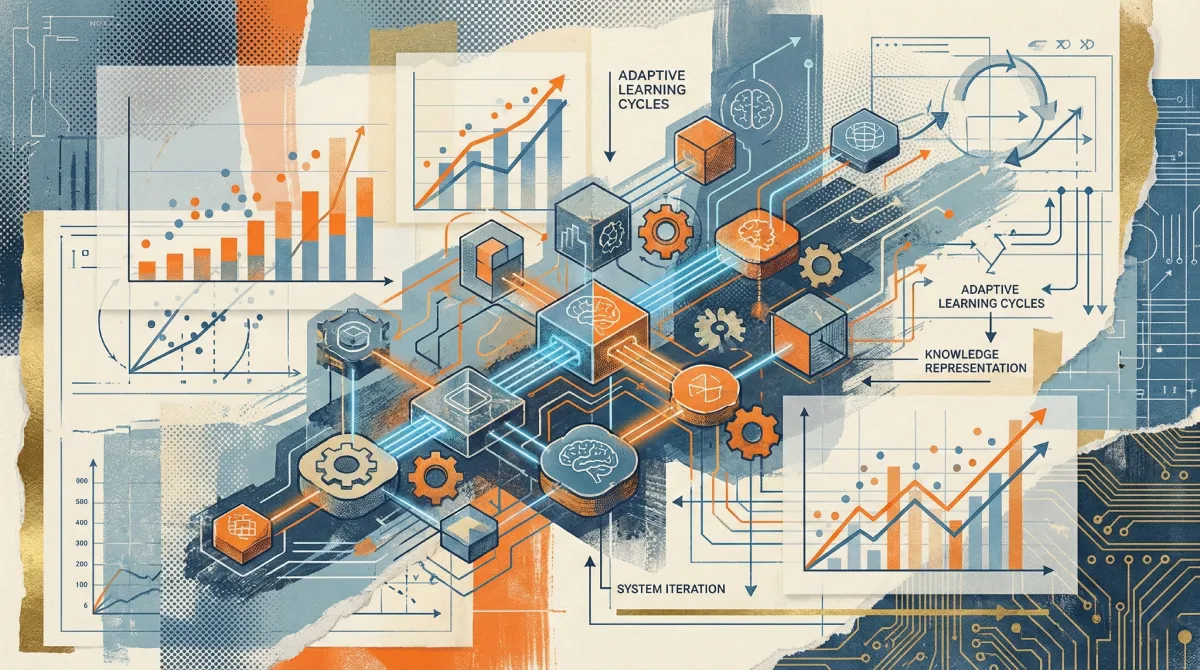
At the heart of Deep Research v2 lies a sophisticated orchestration layer that deviates from traditional, rigid retrieval pipelines. Instead of a linear flow, the system employs “Adaptive Intelligence” powered by a central agentic orchestrator. This orchestrator acts as a high-level manager, evaluating the ambiguity of user prompts and determining whether a query requires a simple factual retrieval or a complex, multi-stage investigation.
Specialized Agent Ecosystem
To achieve granular accuracy, the workload is distributed among three specialized agents:
Grounding Agent: This component performs an initial environmental scan. Before a single word is written, the Grounding Agent investigates the existing context within the user’s workspace to formulate clarification questions. This prevents the “vague prompt” problem by forcing the user to define success criteria—such as specific audiences or timeframes—upfront.
Planning Agent: Once the brief is clear, the Planning Agent translates objectives into a structured, machine-readable roadmap. In v2, this plan is no longer a hidden process but a “shared artifact” that users can edit, prioritize, or redirect before the heavy lifting begins.
Execution Agent: This is the system’s engine, utilizing parallel query execution to sift through multiple data sources simultaneously. It features a “Self-Evolution Engine” that modifies research queries in real-time based on intermediate discoveries, much like a human researcher follows new leads.
Test-Time Diffusion and Denoising
One of the most innovative technical additions in v2 is the implementation of “Test-Time Diffusion.” In this context, the system treats the initial draft as a high-entropy “noisy” state. Through targeted research and iterative verification, the model systematically “denoises” the report—filling gaps where claims are weak and verifying citations against the “Memory Bank,” a persistent repository of sources created during the execution phase.
Contextual Integration: Bridging Internal and External Data
A recurring pain point in enterprise AI has been the “information silo” effect. First-generation tools were often restricted either to internal wikis or the public internet, but rarely integrated both effectively. Deep Research v2 introduces a hybrid retrieval model that draws from the public web alongside the Atlassian Teamwork Graph—the proprietary data layer that maps relationships between people, projects, and goals within a company.
This integration allows for end-to-end strategy work. For example, a team evaluating a new cloud security protocol can now produce a report that combines internal incident histories from Jira with external industry benchmarks and vendor documentation found on the web. This intersection of internal context and external signal ensures that reports are not just accurate summaries of existing data but insightful evaluations of how an organization compares to the broader market.
Evaluation Metrics: The RACE Framework
To move from qualitative “vibes-based” assessment to quantitative engineering, Atlassian utilizes the RACE framework for evaluating long-form research. This rigorous benchmarking methodology assesses AI-generated reports across four specific dimensions:
Comprehensiveness: Does the report omit major points or alternative angles?
Insight: Does it go beyond surface facts to identify underlying patterns or risks?
Instruction Following: How faithfully did the agent adhere to the specific constraints of the research brief?
Readability: Is the structure logical and ready for executive consumption?
By using an “LLM-as-a-judge” approach through the RACE framework, Atlassian engineers can assign query-specific weighting to these categories. For a technical audit, instruction following may be weighted higher; for a market scan, insight and comprehensiveness become the priority. Internal benchmarks suggest that reports generated via v2 are increasingly scoring higher than human-written references in terms of depth and structured clarity.
Scalability and System Robustness
Deep Research tasks are computationally intensive and can run for several minutes. To prevent these long-running jobs from degrading the performance of standard chat queries, Atlassian moved v2 execution to an asynchronous background system.
When a research task is initiated, the primary web server offloads the job to a dedicated pool of background workers. This allows users to continue using other Rovo features while the research persists. Furthermore, the introduction of “reconnectable streaming” ensures that if a user experiences a network drop or switches devices, the research session remains active. The browser simply reconnects to the stateful worker node and continues the stream from the last successfully processed event.
Future Implications for the Autonomous Enterprise
As we look toward 2026, the arrival of Deep Research v2 signals a broader trend: the transition of AI from a “copilot” that helps humans write, to an “agent” that handles the cognitive labor of investigation. The modularity of this architecture—where models from OpenAI, Anthropic, and Google can be swapped or tuned via feature flags—suggests that the future of enterprise AI lies in flexible, multi-model ecosystems rather than single-provider lock-in.
The ultimate takeaway for digital leaders is that AI “growing up” means AI becoming more steerable. The “fire-and-forget” era is ending; the era of collaborative, iterative research agents is beginning. For teams buried under years of fragmented data in Confluence and Jira, these autonomous systems offer a way to turn “scattered noise” into actionable strategic intelligence.
Source: https://www.atlassian.com/blog/artificial-intelligence/rovo-deep-research-v2
Would you like me to generate a technical comparison between the RACE framework and traditional RAG evaluation metrics to help your team refine its internal AI testing strategy?