
The Next Wave of Financial Compliance: Autonomous AI Agents Transform KYC and AML Processes
The mandatory Know Your Customer (KYC) compliance and Anti-Money Laundering (AML) checks are essential yet notoriously manual and resource-intensive components of the global financial services industry. While financial institutions have long relied on rudimentary payment automation and Robotic Process Automation (RPA) to expedite KYC processes, the emergence of agentic Artificial Intelligence (AI) represents a profound upgrade. These autonomous AI agents are redefining the standards for efficiency, accuracy, and risk management in compliance-heavy workflows, particularly those requiring complex customer due diligence (CDD) and enhanced due diligence (EDD).
Agentic process automation combines the task execution capabilities of RPA with the cognitive power of Machine Learning (ML), Natural Language Processing (NLP), and generative AI. The result is an intelligent system capable of handling end-to-end digital tasks and making decisions with minimal human intervention. For KYC compliance, this shift is critical because traditional systems are plagued by slow turnaround times, high rates of false-positive alerts, and an inability to swiftly adapt to evolving financial crime and regulatory demands. By integrating specialized AI agents, financial institutions can move beyond simple task repetition to deploy systems that reason, learn, and proactively manage the complex data environment of financial crime prevention.
The Technical Evolution of KYC Automation
Traditional KYC automation systems often focus on streamlining basic data entry and document matching. While useful, these solutions lack the cognitive depth required to analyze unstructured data, cross-reference dynamic sources, or autonomously update processes based on external events. AI agents bridge this gap by offering a fusion of technologies under a goal-driven framework.
Cognitive Automation and Data Synthesis
The core technical advantage of KYC AI agents lies in their ability to handle vast amounts of both structured and unstructured data at speed. In a typical KYC process—involving customer identification, verification, and risk profiling—agents utilize advanced AI models to perform several critical functions:
Intelligent Document Processing: Agents use NLP and computer vision to ingest, interpret, and extract key information from diverse documents (IDs, utility bills, financial statements), ensuring they comply with current regulatory requirements. This goes beyond simple Optical Character Recognition (OCR) to include semantic understanding and validation.
Cross-Reference and Data Location: Agents can simultaneously query and cross-reference customer data across numerous internal and external sources, including sanctioned party lists, public records, and even news reports or social media, significantly improving the thoroughness of due diligence.
Anomaly Detection and Risk Scoring: Using Machine Learning algorithms, AI systems analyze customer behavior, transaction patterns, and collected data to rapidly detect anomalies or suspicious activity. They assign dynamic risk scores to individual or business profiles, enabling more accurate and nuanced risk assessments than static rule-based systems.
This cognitive capability allows the AI agent to quickly track down key information and facilitate verification and approval, bridging the typical long lag time between first customer contact and final onboarding.
Compliance and Regulatory Agility
One of the most persistent challenges in financial compliance is keeping pace with constantly changing global regulations, such as those governing AML, sanctions screening, and data privacy. Manual processes are slow to adapt, leaving institutions vulnerable to compliance gaps. AI agents introduce a layer of regulatory agility.
Dynamic Regulatory Mapping: Intelligent agents can be designed with specialized “vertical AI” capabilities, meaning they possess deep domain knowledge of KYC and AML processes. More critically, they can be continuously updated with the latest regulations. As soon as a new change is implemented—for example, a change in sanctions lists or reporting thresholds—the agents can be notified and their execution logic updated immediately, minimizing process downtime and risk exposure.
Continuous Monitoring and Due Diligence: Unlike human-driven processes which often involve periodic checks, AI systems can conduct sanctions screening and transaction monitoring continuously, providing real-time insights. The system continuously tracks customer behavior and transaction data for unusual patterns, drastically improving the accuracy and timeliness of risk detection compared to intermittent checks.
By locking the AI agents into the latest regulatory requirements, financial institutions secure a significant advantage in maintaining robust, real-time compliance.
Market Impact: Efficiency and Customer Experience
The market benefits of deploying KYC AI agents extend beyond mere compliance to encompass tangible improvements in efficiency, operational security, and the crucial element of customer experience (CX).
From an operational standpoint, automation driven by AI agents directly reduces the volume of manual work required, lowering operational costs and improving the accuracy of document processing and reconciliation. In a use case involving retirement plan onboarding, for example, the integration of AI agents can cut down the typical onboarding time significantly by automating document checks and data validation, delivering the high turnaround times demanded by modern banking environments.
From a customer experience perspective, the speed of agentic automation is transformative. Customers expect seamless, near-instantaneous account opening or loan application processes.
The ability of AI systems to rapidly perform facial recognition, ID verification, and document analysis, while simultaneously notifying the customer of any missing information, dramatically streamlines onboarding. This reduction in friction translates directly into improved customer satisfaction and retention, turning a historically tedious regulatory hurdle into a smooth digital interaction.
The Governance Imperative: Addressing AI Bias
As AI agents take on critical decision-making roles—such as assigning risk scores—the risk of algorithmic bias must be actively managed. Biases inadvertently introduced via training data can lead to unfair treatment of certain customer groups, posing significant ethical and legal challenges, particularly under evolving global AI regulations.
Therefore, the successful deployment of KYC AI agents necessitates embedding strong AI governance practices from the outset. This includes:
Fairness and Transparency: Implementing mechanisms to monitor and mitigate bias within the Machine Learning models.
Accountability: Ensuring that the decision-making process of the non-deterministic agent is fully auditable and explainable.
By upgrading RPA with AI agents within a controlled and secure environment, institutions can ensure better document interpretation and risk assessment while strictly upholding principles of fairness, transparency, and accountability. This is often facilitated by specialized tools and services, such as agent builder platforms, that allow institutions to develop tailored AI agents suited to their specific compliance workflows while integrating necessary ethical guardrails.
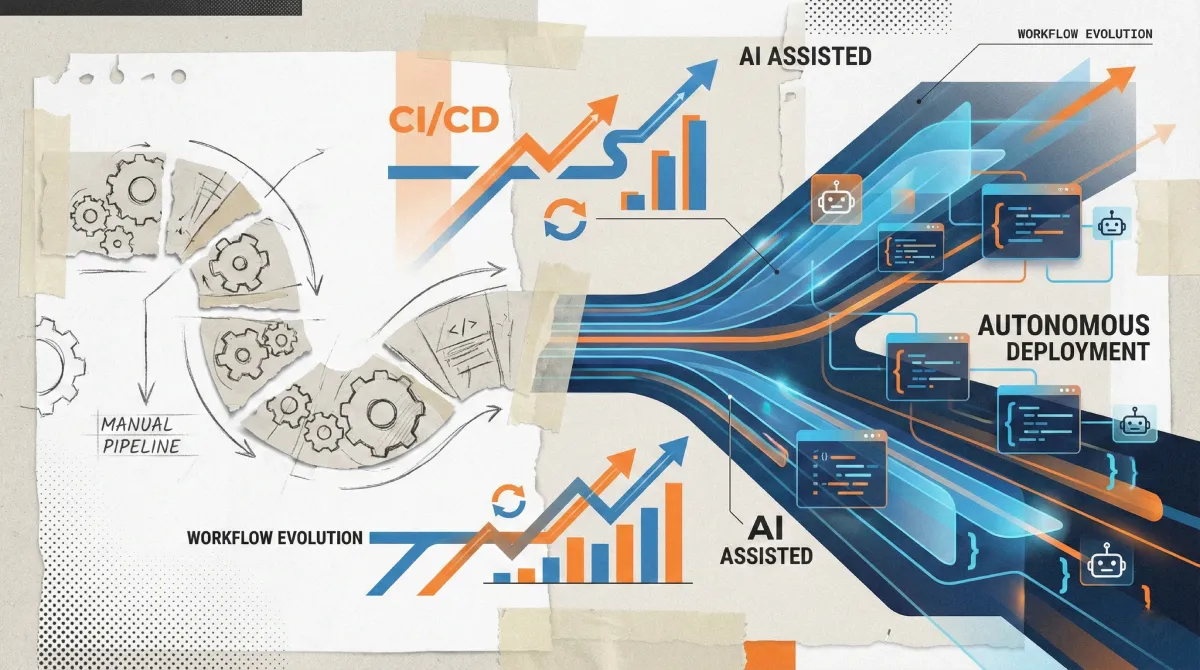
The future of AI in banking is defined by agentic automation. What began as simple office automation has evolved into end-to-end financial services automation, leading to total digital transformation. AI-driven KYC processes are not merely incremental improvements; they are creating more agile, compliant, streamlined, and intelligent workflow automation essential for navigating the increasing complexity of financial regulation and the demands of the modern customer.
Source: https://www.blueprism.com/resources/blog/kyc-ai-agents-compliance/